
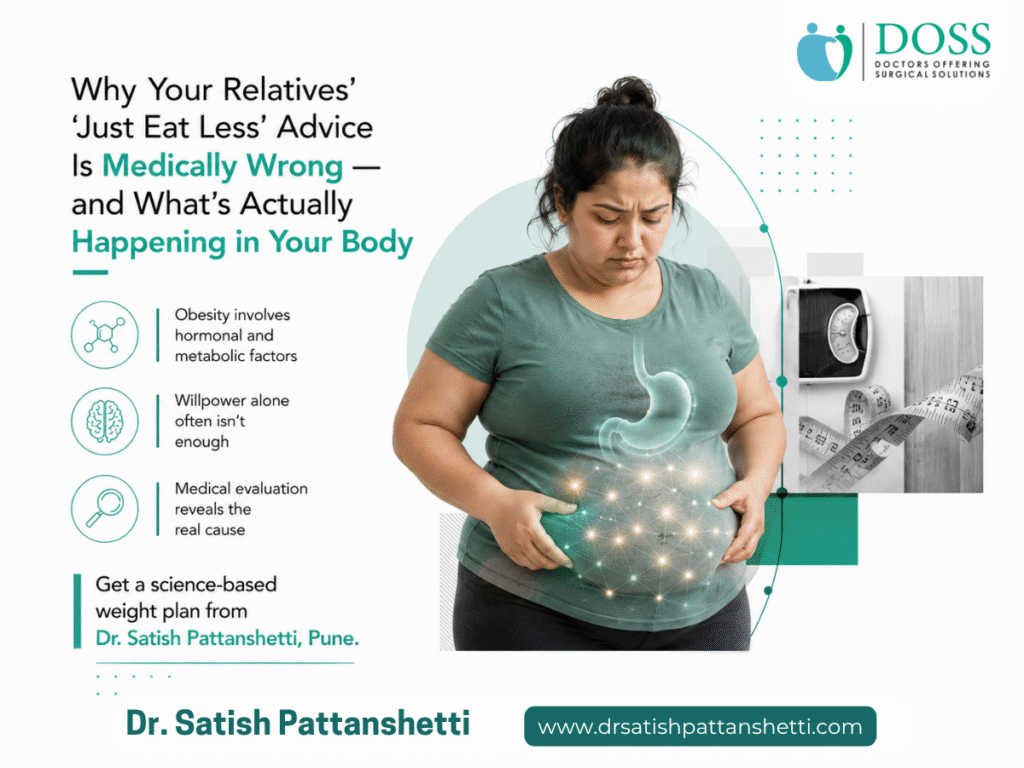
Every family gathering seems to come with the same well-meaning line. “Just eat less, you’ll be fine.” It usually comes from someone who has never struggled with their weight, delivered with total confidence, as if managing body weight were as simple as pushing a plate away. The truth is, this advice is not just unhelpful, it is medically inaccurate. Decades of research in endocrinology and metabolism show that the body actively resists weight loss through a complex set of hormonal and metabolic mechanisms that have nothing to do with willpower.
If you have ever cut your calories, lost some weight, and then watched it creep back no matter how “disciplined” you were, you are not imagining things. Here is what is actually happening inside your body, and why obesity treatment needs to be approached as a medical issue rather than a matter of self control.
Your Body Has a Set Point, and It Fights to Defend It
One of the most important concepts in modern obesity research is the idea of a body weight “set point.” According to the Cleveland Clinic, when a person loses weight, particularly through calorie restriction, the body interprets this as a threat and works to pull weight back toward its previous baseline. This isn’t a psychological quirk, it is a survival mechanism built over thousands of years of human evolution, when food scarcity was a real and constant danger.
When someone diets, the body begins to defend its set point through several changes:
- Resting metabolic rate drops, meaning fewer calories are burned even at rest
- Muscle mass often declines alongside fat mass, further slowing metabolism
- Everyday movement, known as non-exercise activity thermogenesis, decreases without the person even noticing
- Hunger hormones rise sharply while fullness hormones fall
This combination is what researchers call adaptive thermogenesis, and it means that after weight loss, a person often needs to eat even less than before just to maintain their new weight, let alone lose more.
The Hormones Working Against “Just Eating Less”
Two hormones sit at the center of this biological pushback: leptin and ghrelin. Leptin is produced by fat cells and signals to the brain that the body has enough energy stored. Ghrelin, produced mainly in the stomach, drives hunger. Under normal circumstances, these two hormones balance each other out.
Once a person loses body fat, leptin levels drop, sometimes dramatically. The brain does not interpret this drop as progress, it interprets it as starvation, and responds by increasing hunger and slowing energy expenditure. At the same time, ghrelin levels rise, intensifying appetite. Research on former contestants of extreme weight loss competitions has shown that these hormonal shifts can persist for years after weight loss, not just weeks, which is one reason relapse is so common even among highly motivated people.
This is precisely why obesity treatment that relies solely on telling someone to “eat less” ignores the biology entirely. The problem is not a lack of discipline, it is a hormonal environment actively working against sustained weight loss.
Genetics Play a Much Bigger Role Than Most People Realize
Another piece your relatives are likely unaware of is just how strongly genetics influence body weight. Twin studies, considered the gold standard for measuring heritability, have consistently found that genetic factors account for anywhere between 40 and 90 percent of the variation in body mass index among individuals, with many large studies clustering around 70 to 75 percent. A pooled analysis of more than 140,000 twin pairs found genetics explained a substantial majority of BMI variation, underlining that body weight is influenced far more by inherited biology than by individual choices alone.
This does not mean lifestyle and environment do not matter, they clearly do. But it does mean that two people can eat similar diets and exercise similarly, yet respond in very different ways based on their underlying genetic makeup. Blaming a person’s weight entirely on effort ignores this well-documented reality.
Why Obesity Is Classified as a Chronic Disease
Major medical bodies, including the American Medical Association, formally recognize obesity as a chronic disease rather than a lifestyle failure. This classification exists because obesity involves measurable, ongoing physiological dysfunction, not a temporary state that can be corrected through short-term willpower alone. This is also why the field of obesity treatment has evolved so significantly in recent years, moving toward medically supervised approaches that address the underlying hormonal and metabolic drivers rather than relying on generic diet advice.
What Actually Helps, According to the Evidence
Instead of blanket statements like “eat less,” effective, evidence-based approaches tend to focus on:
- Preserving muscle mass through adequate protein intake and resistance training, which helps offset metabolic slowdown
- Medical evaluation of hormonal factors, including thyroid function and insulin resistance
- Structured, supervised programs rather than unsupervised extreme restriction, which tends to worsen metabolic adaptation
- In appropriate cases, medications or surgical options that directly target the hormonal drivers of hunger and satiety
The Bottom Line
The next time someone offers the “just eat less” line, know that the science simply does not support it as a standalone solution. Weight regulation is governed by hormones, genetics, and metabolic processes that operate largely outside conscious control. Real, lasting progress comes from working with your biology through proper medical guidance, not fighting an uphill battle against it alone.
Read More –
- Obesity: Reasons, Consequences & Prevention
- Can Bariatric Surgery Reverse Diabetes, Sleep Apnea and Other Obesity Related Health Problems?
- Why Am I Not Losing Weight Despite Diet and Exercise? When Medical Obesity Treatment May Be Needed
How Dr. Satish Pattanshetti Can Help
Understanding the real biology behind weight gain is the first step toward sustainable results, and that is exactly where the right medical guidance makes all the difference. Dr. Satish Pattanshetti specializes in evidence-based obesity treatment in Pune, offering thorough hormonal and metabolic evaluations along with personalized treatment plans that go far beyond generic diet advice. Whether you are exploring lifestyle-based management, medical therapy, or surgical options, Dr. Satish Pattanshetti works closely with each patient to design a plan rooted in how your body actually functions, not outdated assumptions about willpower.
Frequently Asked Questions
- Why do I regain weight even after successfully dieting? Weight regain after dieting is largely driven by biology, not a lack of willpower. When you lose weight, your body reduces resting metabolic rate and increases hunger hormones like ghrelin while lowering satiety hormones like leptin, a process known as metabolic adaptation. These changes can persist for a long time after weight loss, making regain common even among disciplined dieters.
- Is obesity really genetic, or is it mostly about lifestyle choices? Twin studies consistently show that genetics account for a significant portion of body weight variation, with estimates often ranging between 40 and 90 percent depending on the study population. While diet and activity levels matter, genetics strongly influence how a person’s body responds to food intake and exercise, which is why identical lifestyles can produce very different results in different people.
- What actually works better than “just eating less” for long-term weight management? Medically supervised obesity treatment that addresses hormonal balance, preserves muscle mass through protein and resistance training, and considers medication or surgical options where appropriate tends to produce far more sustainable results than unsupervised calorie restriction alone. A personalized, medically guided approach accounts for the body’s natural resistance to weight loss rather than working against it.
#ObesityTreatment #WeightLossScience #MetabolicHealth #ObesityAwareness #HealthyLiving #PuneHealthcare #WeightManagement #HormoneHealth