
Midlife Metabolic Changes and Obesity Treatment in Pune
Many women notice that weight begins to rise or moves toward the abdomen during the menopausal transition, even though their usual meals and exercise routine seem unchanged. This can be frustrating, particularly when the change is interpreted as a lack of discipline.
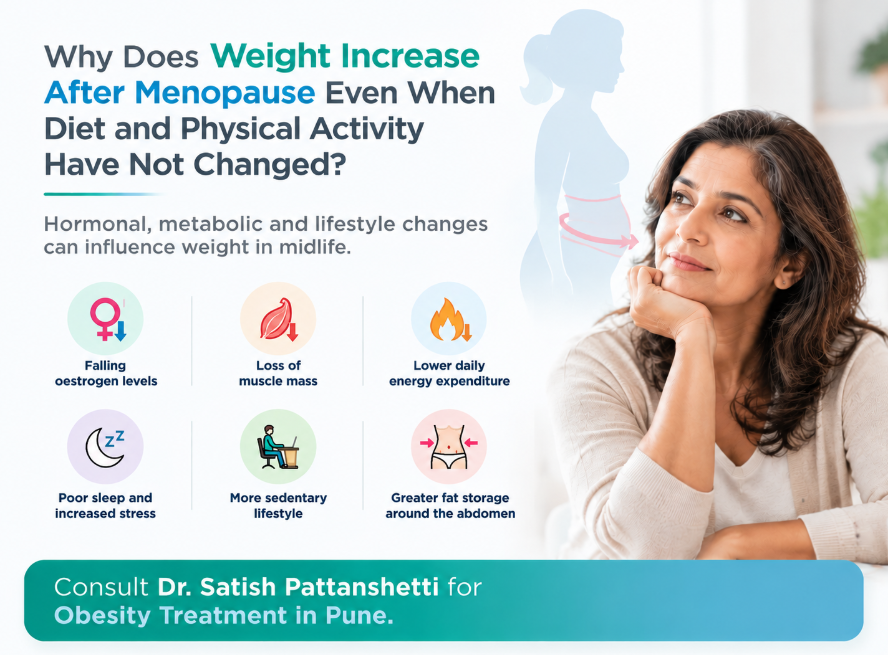
Menopause does influence body composition, but it is rarely the only factor. Age-related loss of muscle, lower daily energy expenditure, disrupted sleep, stress, medicines, and changes in activity intensity can combine with falling oestrogen. A thoughtful obesity treatment plan should examine these overlapping factors rather than recommend an extreme diet.
Is Menopause or Age Responsible?
Both contribute, but in different ways. The Menopause Society explains that ageing is a major driver of midlife weight gain, while menopause plays an important role in redistributing fat toward the abdomen.
With age, adults tend to lose muscle unless they actively preserve it. Muscle is metabolically active and supports movement, balance, and glucose use. A gradual fall in muscle mass can reduce total daily energy expenditure even when structured exercise appears unchanged.
Falling oestrogen may favour greater central or visceral fat storage. This means the waist can expand even when the change on the scale is modest. Abdominal fat is clinically important because it is associated with increased cardiometabolic risk.
Why Can an Unchanged Routine Stop Working?
The same routine can have a different effect when the body and daily environment change. A walk that once challenged the heart and muscles may become easier over time. Work patterns may become more sedentary, and small reductions in spontaneous movement can occur without being noticed.
Sleep may also deteriorate because of hot flushes, night sweats, mood symptoms, pain, or sleep apnoea. Poor sleep can increase hunger, reduce energy for activity, and make highly palatable foods more appealing. Stress and caregiving responsibilities may further affect meal timing and recovery.
Food portions may truly be unchanged, but the energy required to maintain weight may be slightly lower than it was years earlier. A small daily difference can accumulate gradually without any obvious change in eating behaviour.
Other Causes That Should Not Be Missed
- Underactive thyroid or changes in thyroid treatment
- Medicines such as some antidepressants, steroids, or diabetes treatments
- Sleep apnoea, particularly with snoring and daytime sleepiness
- Depression, chronic stress, or reduced sleep duration
- Reduced mobility because of joint or back pain
- Fluid retention related to heart, kidney, liver, or venous disease
Rapid weight gain, marked swelling, breathlessness, or other new symptoms should be assessed rather than attributed to menopause.
Does Hormone Therapy Cause or Prevent Weight Gain?
Menopausal hormone therapy is prescribed primarily for suitable patients with bothersome symptoms, not as a weight-loss treatment. The American College of Obstetricians and Gynecologists notes that oestrogen therapy may influence where fat is stored but does not produce weight loss by itself.
The decision to use hormone therapy depends on symptoms, age, time since menopause, medical history, and individual risks. It should not be started solely to change body weight.
What Type of Exercise Is Most Helpful?
Aerobic exercise supports heart health and calorie expenditure, but resistance training becomes especially important in midlife. Strength work helps preserve or rebuild muscle, supports bone health, and makes everyday activity easier.
A balanced programme may include two or more weekly strength sessions, regular brisk walking or other aerobic activity, and exercises for balance and mobility. People with joint pain, heart disease, or a long period of inactivity should start gradually with professional guidance.
Progression matters. Increasing resistance, duration, pace, or complexity over time prevents the body from simply adapting to an unchanged routine.
How Should Nutrition Change?
The goal is not severe restriction. Meals that contain adequate protein, vegetables, fruit, high-fibre carbohydrates, and healthy fats can support fullness and muscle. Liquid calories, alcohol, frequent snacks, and restaurant portions can add energy without feeling like a major dietary change.
Protein distribution across meals may be useful for muscle maintenance, while fibre supports satiety and bowel health. A dietitian can tailor intake to kidney health, diabetes risk, cultural food preferences, and activity level.
When Should Medical Obesity Treatment Be Discussed?
Medical support may be appropriate when weight is affecting blood pressure, glucose, sleep, joints, liver health, mobility, or quality of life. Treatment can include structured lifestyle care, management of sleep or hormonal symptoms, anti-obesity medicines, and, for selected patients, metabolic surgery.
Body mass index is one measure, but waist circumference, weight-related diseases, previous attempts, medicines, and personal goals are also important. Sustainable improvement in health is a more useful goal than chasing a particular dress size.
Frequently Asked Questions
- Is weight gain after menopause inevitable?
No. Ageing and hormonal change can make weight management more challenging, but weight gain is not unavoidable. Strength training, adequate protein, restorative sleep, and an individual nutrition plan can help preserve muscle and limit fat gain.
- Why is most of the new weight around my abdomen?
Falling oestrogen is associated with a shift toward central fat storage. Age-related muscle loss and insulin resistance may also contribute. Increasing waist size deserves attention because abdominal fat is linked with cardiometabolic risk.
- Will hormone therapy help me lose weight?
Hormone therapy may improve menopausal symptoms and may influence fat distribution, but it is not a weight-loss medicine. Suitability should be discussed with a qualified clinician based on symptoms and medical risks.
Consult Dr. Satish Pattanshetti for Obesity Treatment in Pune
Midlife weight change is influenced by hormones, ageing, sleep, muscle, health conditions, and medicines. Dr. Satish Pattanshetti offers individual evaluation for women seeking obesity treatment in Pune. A personalised plan can focus on metabolic risk, sustainable weight management, and the treatment options appropriate for the individual.
This article is for general information and does not replace personalised menopause or obesity care.
#menopausehealth #midlifehealth #weightmanagement #obesitytreatment #womenshealth #metabolichealth #punehealthcare