
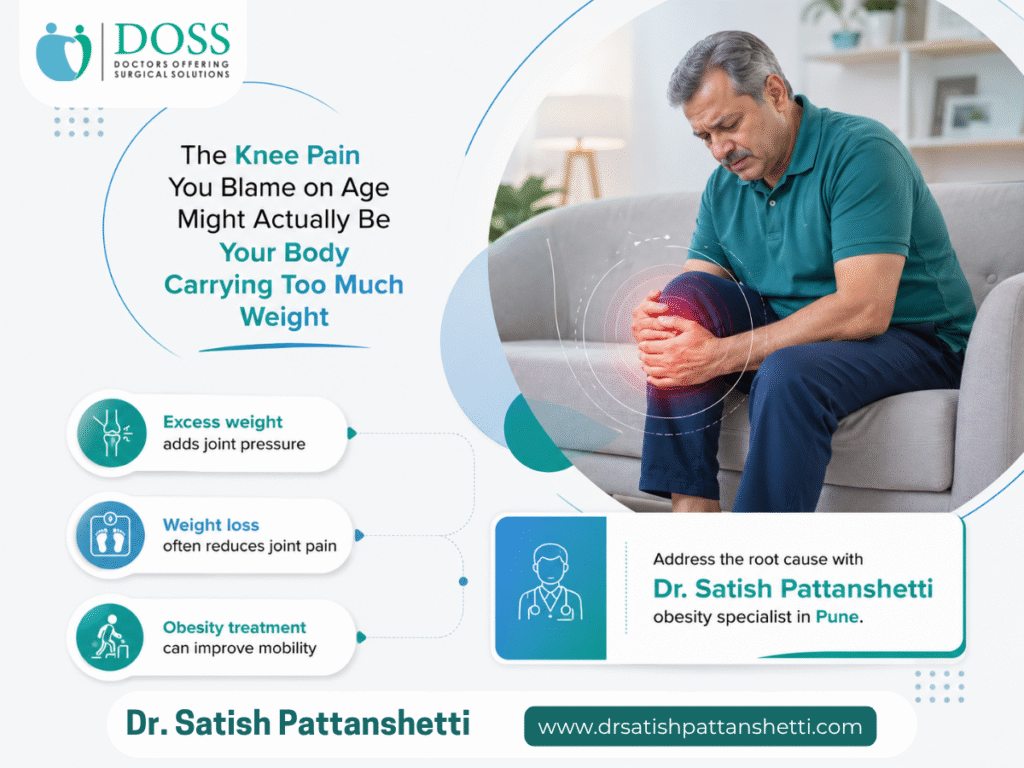
“It’s just age catching up with me.” That’s the line most people reach for when their knees start aching on stairs or after a long walk. It’s a comforting explanation because it feels inevitable, something nobody can control. But research increasingly points to a factor that’s far more within your control than the number of candles on your birthday cake: excess body weight.
If your knee pain has been getting worse over the years, the real culprit might not be age alone. It could be the extra load your knees have been carrying every single day.
The Real Link Between Body Weight and Knee Pain
Your knees are weight-bearing joints, and every extra kilogram you carry translates into significantly more pressure on them with every step. This isn’t just a general assumption; it’s backed by decades of orthopedic research.
A landmark finding from the Framingham study showed that women who lost at least five kilograms experienced a 50 percent reduction in their odds of developing symptomatic knee osteoarthritis. On the flip side, a recent meta-analysis found that people with obesity face a 4.6-fold greater risk of developing osteoarthritis compared to those at a healthy weight.
Here’s why this connection is so strong:
- Mechanical overload: Extra body weight increases the direct pressure on knee cartilage with every step, run, or climb, accelerating wear over time.
- Systemic inflammation: Excess fat tissue, particularly around the abdomen, releases inflammatory compounds that can affect joint health beyond just weight-bearing pressure, which is one reason obesity has also been linked to arthritis in non-weight-bearing joints like the hands.
- Cumulative daily strain: Research published in a cross-sectional study on knee osteoarthritis found that as body mass index increases, so does the intensity of knee pain, even when the severity of joint damage on X-rays remains the same.
A large population-based cohort study also found that both general obesity and central obesity independently raised the risk of knee osteoarthritis, with the highest risk seen in people carrying both types, and notably, this pattern was more pronounced in women and younger adults, not just older populations. In other words, the “it’s just age” explanation doesn’t hold up as neatly as most people assume.
Why Losing Weight Actually Helps Your Knees Recover
The encouraging part of this research is that the relationship works both ways. Just as excess weight worsens knee pain, weight loss has been shown to meaningfully reduce it, and in some cases, delay or avoid the need for joint replacement surgery altogether.
A study following middle-aged and older adults with overweight or obesity found that a weight loss of more than 7.5 percent of body weight was associated with a notably lower risk of eventually needing total knee replacement. Another cohort study reported that losing more than 10 percent of body weight could meaningfully reduce both pain and functional limitations linked to osteoarthritis.
What’s striking is how directly the numbers add up. Researchers have also found that keeping weight stable, not just losing it, matters for joint health. One longitudinal study showed that frequent weight fluctuation, losing and regaining weight repeatedly, was linked to a small but measurable increase in knee pain and joint space loss over time.
This is precisely why most global clinical guidelines for managing osteoarthritis in people with overweight or obesity now recommend weight loss as a core, non-negotiable part of treatment, not an optional add-on.
When Diet and Exercise Aren’t Enough
For many people, especially those with a BMI in the obese range, sustainable weight loss through diet and exercise alone is genuinely difficult, particularly when knee pain limits mobility in the first place. This creates a frustrating cycle: the pain makes it harder to move, and the inability to move makes weight loss harder to achieve.
This is where medically supervised weight loss surgery becomes a serious option worth discussing with a specialist, especially for those who have struggled with conventional weight loss methods and are already dealing with joint damage. Given that studies estimate 80 to 95 percent of people needing a total joint replacement also carry excess weight, addressing the weight itself can be just as important as treating the joint.
As Dr. Satish Pattanshetti often explains to patients dealing with chronic knee pain linked to excess weight, the goal of weight loss surgery isn’t just about the number on the scale. It’s about reducing the daily mechanical and inflammatory burden on joints, which can meaningfully improve mobility, delay the need for knee surgery, and improve overall quality of life.
Weight loss surgery, when recommended appropriately, can offer a level of sustained weight reduction that’s difficult to achieve through lifestyle changes alone, particularly for individuals with a BMI that puts them at high risk for joint deterioration.
Read More –
- From Weight Loss to Hernia Repair: Choose Robotic Precision
- Why Am I Not Losing Weight Despite Diet and Exercise? When Medical Obesity Treatment May Be Needed
- Exercise, Walking and Lifting Weights with a Hernia: What Is Safe and What Is Not?
Don’t Let “It’s Just Age” Stop You From Asking the Real Question
If your knee pain has been steadily worsening and you’ve noticed it correlates with weight gain over the years, it’s worth having an honest conversation with a specialist rather than accepting joint pain as an unavoidable part of getting older.
Dr. Satish Pattanshetti works with patients to evaluate whether their knee pain is being driven, at least in part, by excess weight, and helps determine whether medical weight management or weight loss surgery in Pune could be the right path forward. If you’re tired of pain that keeps getting dismissed as “just age,” a proper evaluation could reveal a far more treatable cause, and a far more manageable path to relief.
Frequently Asked Questions
- Can losing weight really reduce knee pain, or is joint damage permanent once it starts?
Weight loss can meaningfully reduce knee pain even in people with existing osteoarthritis. Studies have shown that losing more than 7.5 to 10 percent of body weight is associated with reduced pain, improved function, and a lower risk of eventually needing knee replacement surgery. While it may not reverse existing joint damage entirely, it can significantly slow progression and ease symptoms. - How much does body weight actually affect knee joint pressure?
Research shows a strong, direct relationship between body weight and knee joint stress. Higher BMI has been linked to increased knee pain intensity even when the underlying joint damage visible on X-rays is similar between individuals, suggesting excess weight contributes to pain through both mechanical load and inflammatory effects. - When should someone consider weight loss surgery for knee pain related to obesity?
Weight loss surgery is typically considered when diet and exercise alone haven’t led to sustainable weight loss, especially in people with a high BMI and existing joint pain that limits physical activity. A specialist can evaluate whether weight loss surgery is an appropriate option based on overall health, BMI, and the severity of joint symptoms.
#KneePain #WeightLossJourney #Osteoarthritis #WeightLossSurgeryInPune #JointHealth #HealthyWeight #BariatricSurgery #MobilityMatters #FitnessGoals #HealthAwareness