
Planning Long-Term Obesity Treatment in Pune
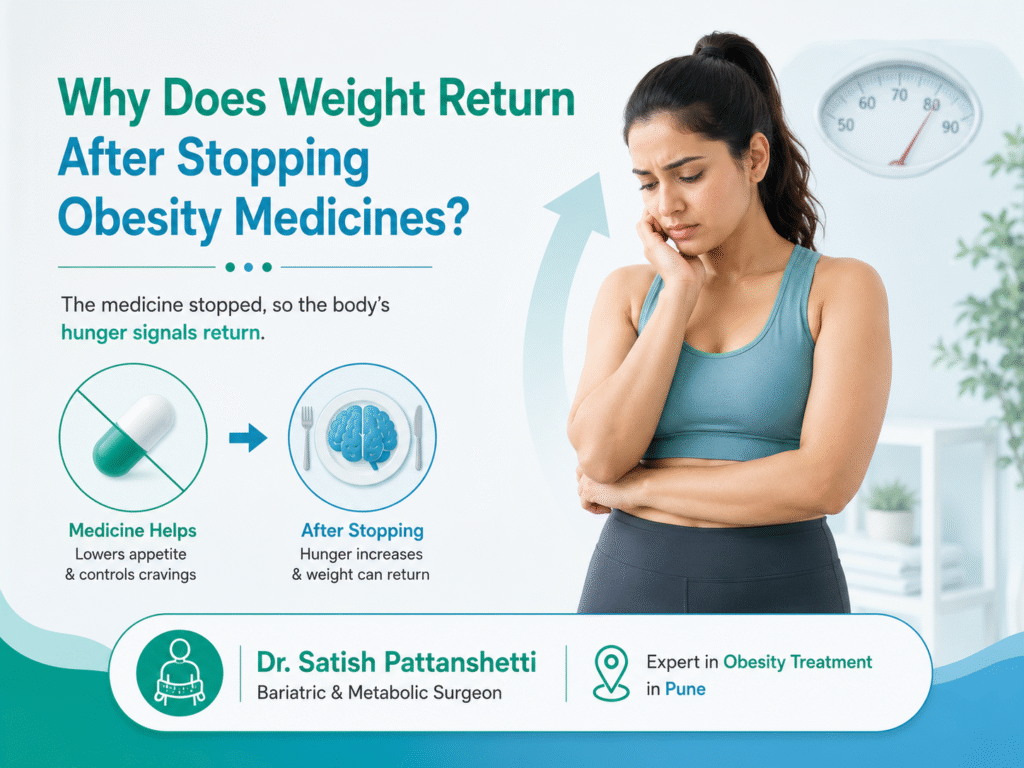
Obesity medicines can reduce appetite, improve fullness and help many people achieve meaningful weight loss. When treatment stops, however, hunger may increase and some weight may return. This is not simply a lack of discipline. Obesity is a chronic, biologically regulated condition, and the medication was helping to influence the systems that control appetite and energy balance.
Understanding this helps replace blame with a practical plan. A person considering a change in treatment should speak with the prescribing clinician rather than stopping suddenly or restarting independently. Effective obesity treatment in Pune should include long term monitoring, nutrition, activity, sleep and an individual discussion about medicine or surgery.
What Changes When the Medicine Is Stopped?
Medicines used for weight management work through different pathways. GLP 1 based treatments, for example, can reduce appetite, increase fullness and slow stomach emptying. Other medicines affect hunger signals or food cravings in different ways.
Once a medicine is withdrawn, its active effects gradually fade. Hunger may feel stronger, fullness may not last as long and portions can slowly increase. Food thoughts that had become quieter may return. The body also responds to weight loss by trying to conserve energy, which can make maintenance harder.
These changes do not occur identically in everyone. The amount and speed of regain depend on the medicine, duration of treatment, weight lost, eating pattern, activity, sleep, stress, other health conditions and the plan used after stopping.
What Does Research Show?
The STEP 1 trial extension followed participants after semaglutide was withdrawn. One year after treatment ended, participants had regained about two thirds of their previous weight loss on average, and several cardiometabolic improvements moved back toward baseline. This study, published in Diabetes, Obesity and Metabolism, supports the view that continued treatment may be needed for ongoing benefit.
The SURMOUNT 4 randomised trial, published in JAMA, found that people who continued tirzepatide maintained and extended weight reduction, whereas those switched to placebo experienced substantial regain. These are group averages, not a prediction for every individual, but they show that weight return after withdrawal is a recognised biological pattern.
Research should never be used to frighten patients into indefinite treatment. It should support an informed discussion about benefits, side effects, cost, reproductive plans, medical risks and available alternatives.
Why Lifestyle Habits May Not Fully Prevent Regain
Nutrition and activity remain essential, yet they operate within biology. After weight loss, appetite hormones, energy expenditure and reward signals can favour regain. A person may be following healthy habits and still notice that maintaining the same weight requires more effort than before.
Lifestyle care is still valuable because it supports muscle, heart health, glucose control and weight maintenance. It also provides structure if a medicine must be stopped. The realistic goal is not perfection. It is to recognise changes early and adapt the plan before regain becomes distressing.
A Safer Plan Before Stopping Treatment
Before changing an obesity medicine, discuss:
Why treatment is stopping, including side effects, cost, pregnancy planning or limited benefit
Whether a lower dose, different medicine or slower transition is medically appropriate
Which markers will be followed, such as weight trend, waist size, blood pressure or glucose
There is no universal tapering plan for every drug. Some medicines require specific precautions, and decisions should consider diabetes treatment and other prescriptions. Never share injections, use unverified products or change dose according to social media advice.
Habits That Support Weight Maintenance
A maintenance plan should begin while the medicine is still working, not after hunger has fully returned. Helpful foundations include:
Regular meals built around protein, vegetables, fibre and planned portions
Strength training to preserve muscle, plus realistic aerobic activity and daily movement
Adequate sleep, stress management and review of medicines or conditions that promote weight gain
Frequent weighing helps some people but can be stressful for others. Alternatives include clothing fit, waist measurements or scheduled clinic reviews. The method should provide useful information without encouraging obsessive behaviour.
When to Reassess the Treatment Strategy
Small fluctuations are normal. A consistent upward trend, return of uncontrolled hunger, worsening diabetes or renewed sleep apnoea symptoms deserves review. Early action may involve dietary support, behavioural treatment, restarting or changing medication, or considering metabolic surgery when appropriate.
Bariatric surgery is not a punishment for medicine failure. It is an evidence based treatment for selected people with obesity, particularly when health risks are significant or non surgical approaches have not produced durable control. Eligibility and expected benefit must be assessed individually.
Weight stigma can delay care. Regain should be discussed in neutral language, with attention to health and function rather than blame. A respectful clinical relationship makes it easier to report difficulties before they escalate.
Consult Dr. Satish Pattanshetti for Obesity Treatment in Pune
Dr. Satish Pattanshetti offers personalised evaluation for people seeking obesity treatment in Pune, including discussion of previous medicines, weight history, associated conditions and surgical options when indicated. The aim is a sustainable plan built around health, safety and realistic long term follow up.
Frequently Asked Questions
- Will everyone regain weight after stopping obesity medicine?
No. Regain varies, but clinical trials show that it is common after effective medication is withdrawn. Individual outcomes depend on biology, treatment duration, habits, health conditions and the maintenance plan.
- Can I restart the medicine if weight returns?
Possibly, but only after medical review. The clinician must reassess contraindications, side effects, dose, other medicines and whether a different strategy would be safer or more effective.
- Does weight regain mean I failed?
No. Regain is a recognised feature of chronic obesity biology. It means the treatment plan needs reassessment, just as blood pressure may rise when an effective medicine is stopped.
#obesitytreatmentinpune #weightmanagement #obesitymedicine #glp1 #metabolichealth #drsatishpattanshetti