
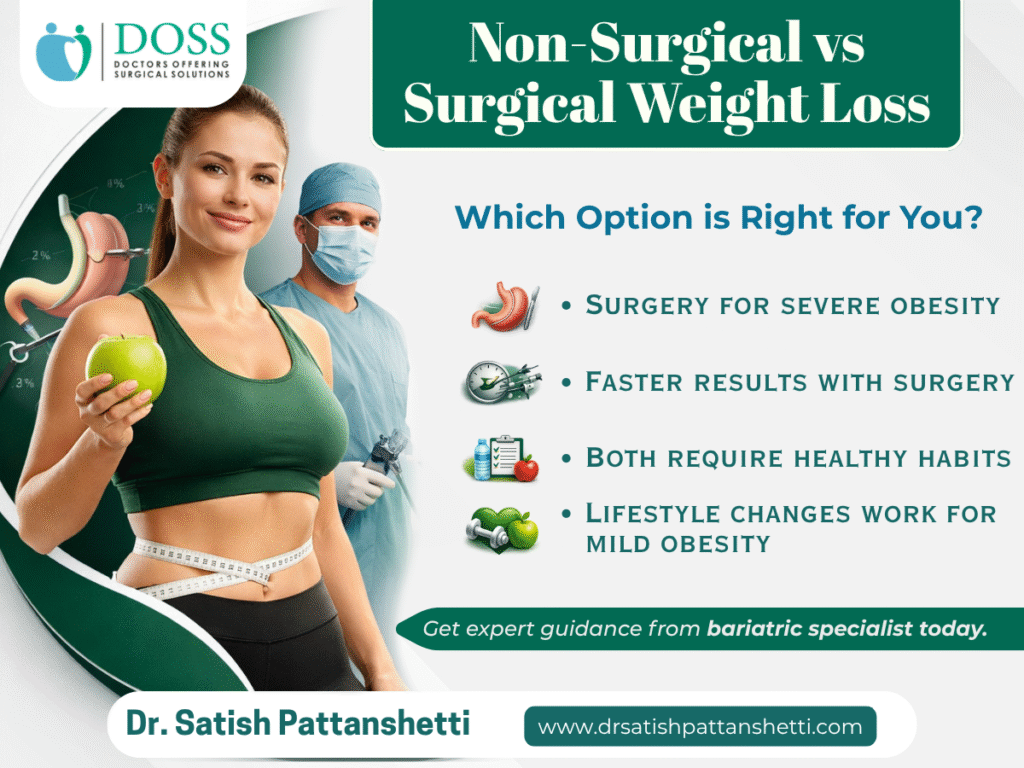
Obesity has become one of the most common health concerns worldwide, affecting millions of people across all age groups. Beyond appearance, excess weight increases the risk of serious health conditions such as diabetes, high blood pressure, sleep apnea, heart disease, and joint problems. As a result, many individuals look for effective and sustainable ways to lose weight and improve their overall health.
One of the most common questions people ask is: Should I choose non-surgical weight loss or surgical weight loss?
Both approaches have their advantages, limitations, and long-term outcomes. Understanding the differences can help individuals make informed decisions based on their health condition, lifestyle, and weight-loss goals.
Understanding Non-Surgical Weight Loss
Non-surgical weight loss focuses on lifestyle modifications and medically supervised methods to reduce body weight without surgery.
Common Non-Surgical Weight Loss Methods
1. Diet and Nutrition Plans
Balanced eating habits remain the foundation of healthy weight management. Nutrition plans typically focus on:
- Reducing calorie intake
- Increasing protein and fiber
- Avoiding processed foods and sugary drinks
- Portion control
2. Regular Exercise
Physical activity helps burn calories, improve metabolism, and strengthen muscles. Common exercises include:
- Walking
- Cardio workouts
- Strength training
- Yoga and flexibility exercises
3. Behavioral Therapy
Many weight issues are connected to emotional eating, stress, or unhealthy habits. Behavioral therapy helps patients develop healthier routines and improve long-term discipline.
4. Weight Loss Medications
In some cases, doctors may prescribe FDA-approved medications to assist with appetite control and metabolism improvement.
Benefits of Non-Surgical Weight Loss
Non-surgical methods are usually recommended for individuals with mild to moderate obesity.
Advantages Include:
- No surgical risks
- Lower cost
- Gradual and natural weight reduction
- Improved overall fitness
- Better lifestyle habits
According to the Centers for Disease Control and Prevention (CDC), losing even 5–10% of body weight can significantly improve blood sugar levels, cholesterol, and blood pressure.
Limitations of Non-Surgical Weight Loss
While lifestyle changes are essential, many individuals struggle to maintain long-term results.
Common Challenges:
- Slow progress
- Weight regain
- Difficulty maintaining strict routines
- Limited effectiveness in severe obesity
Research published by the National Institutes of Health (NIH) suggests that many individuals regain a significant portion of lost weight within a few years if long-term lifestyle adherence becomes difficult.
What Is Surgical Weight Loss?
Surgical weight loss, also known as bariatric surgery, involves procedures designed to help patients lose weight by changing how the digestive system functions.
A qualified Bariatric surgeon evaluates patients to determine whether surgery is appropriate based on BMI, health conditions, and previous weight-loss attempts.
Common Types of Bariatric Surgery
1. Sleeve Gastrectomy
This procedure removes a portion of the stomach, reducing hunger and limiting food intake.
2. Gastric Bypass
This surgery changes the digestive pathway, helping patients absorb fewer calories while reducing appetite.
3. Mini Gastric Bypass
A minimally invasive procedure that combines restriction and reduced calorie absorption for effective long-term weight loss.
Benefits of Surgical Weight Loss
For individuals with severe obesity, bariatric surgery often provides faster and more sustainable results.
Key Benefits:
- Significant weight reduction
- Improvement in Type 2 Diabetes
- Better heart health
- Reduced joint pain
- Improved mobility and energy levels
- Better quality of life
According to the American Society for Metabolic and Bariatric Surgery (ASMBS):
- Bariatric surgery patients may lose 50–70% of excess body weight.
- Many patients experience improvement or remission of obesity-related diseases.
Non-Surgical vs Surgical Weight Loss: Key Differences
| Factor | Non-Surgical Weight Loss | Surgical Weight Loss |
| Weight Loss Speed | Gradual | Faster |
| Best For | Mild obesity | Severe obesity |
| Cost | Lower initially | Higher upfront |
| Long-Term Success | Depends on discipline | Often more effective |
| Health Improvement | Moderate | Significant |
| Recovery Time | Minimal | Requires recovery period |
Which Option Delivers Better Long-Term Results?
The answer depends on the individual’s health condition and obesity severity.
Non-Surgical Weight Loss Works Best When:
- Obesity is mild
- Patients can maintain consistent lifestyle changes
- There are no major obesity-related complications
Surgical Weight Loss Works Best When:
- BMI is significantly high
- Medical conditions like diabetes or sleep apnea are present
- Previous non-surgical efforts have failed
- Weight affects mobility and daily life
It is important to understand that surgery is not a shortcut. Even after bariatric surgery, maintaining healthy eating habits and regular physical activity remains essential for long-term success.
Most healthcare experts agree that bariatric surgery delivers better long-term outcomes for individuals with severe obesity, especially when combined with proper lifestyle management.
When Should You Consult a Bariatric Surgeon?
You should consider consulting a Bariatric surgeon if:
- Your BMI is above 35
- You suffer from obesity-related conditions
- Diet and exercise have not provided lasting results
- Obesity is affecting your physical and emotional well-being
A professional evaluation can help determine the safest and most effective treatment approach.
Final Thoughts
Weight loss is not just about improving appearance it is about protecting long-term health and preventing serious diseases. While non-surgical weight loss methods remain important for many individuals, bariatric surgery has proven highly effective for patients struggling with severe obesity and related health conditions.
The right approach depends on your medical history, lifestyle, and long-term goals. Consulting an experienced specialist can help you choose the safest and most sustainable path toward better health.
If you are looking for expert obesity treatment and advanced surgical care, Dr. Satish Pattanshetti, a trusted Bariatric surgeon in pune, offers comprehensive weight-loss solutions tailored to individual patient needs. With personalized guidance, modern bariatric procedures, and long-term support, patients can achieve healthier and more sustainable results.