
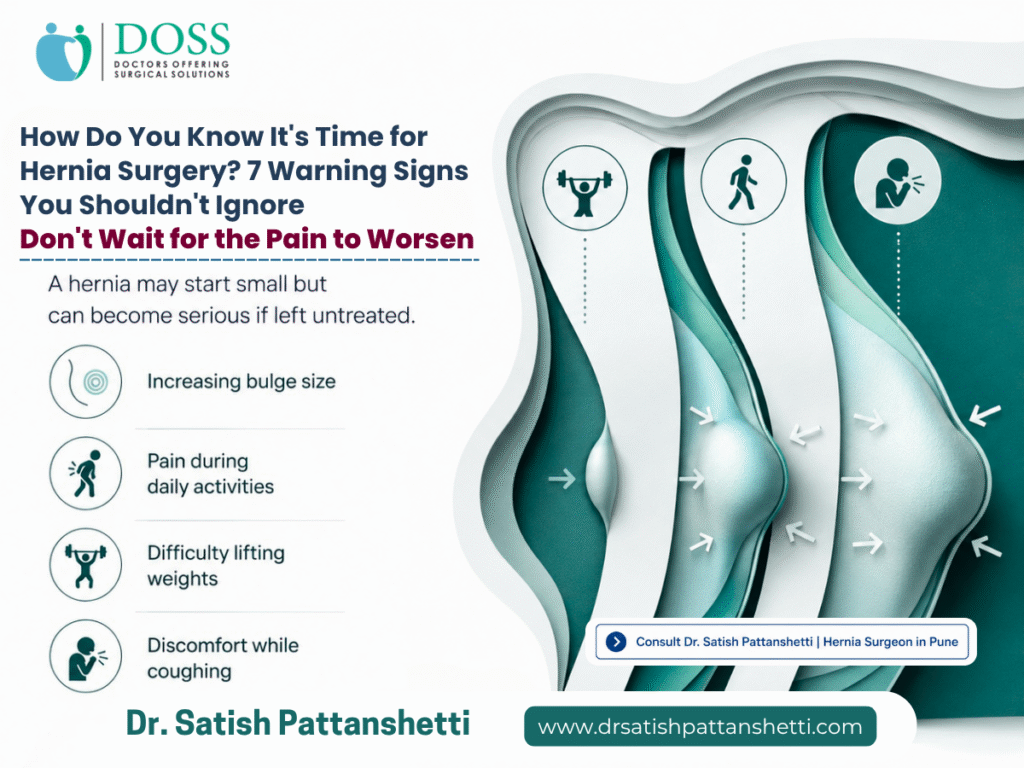
A hernia may start as a small bulge that causes little discomfort. Many people live with a hernia for months or even years, assuming it is harmless because the symptoms seem manageable. However, hernias do not heal on their own, and delaying treatment can sometimes lead to serious complications.
One of the most common questions patients ask is, “How do I know when I actually need surgery?” While not every hernia requires immediate intervention, there are clear warning signs that indicate it may be time to consider hernia treatment.
If you are already exploring advanced surgical care options for conditions such as obesity management from a bariatric surgeon in Pune, it is worth knowing that modern hernia surgery also benefits from minimally invasive techniques that improve safety and recovery outcomes.
According to Dr. Satish Pattanshetti, recognizing the signs early can help prevent complications and ensure timely treatment before the condition becomes more serious.
Understanding Hernias and Why They Progress
A hernia occurs when an internal organ or tissue pushes through a weak spot in the surrounding muscle or connective tissue. Common types include inguinal, umbilical, femoral, and incisional hernias.
The problem is that hernias typically do not disappear without surgical repair. In many cases, they gradually become larger and more symptomatic over time.
According to the American College of Surgeons, millions of hernia repair procedures are performed worldwide each year, making it one of the most common surgical conditions treated today.
Source:
https://www.facs.org
While some small hernias may initially be monitored, worsening symptoms often indicate the need for Hernia Treatment.
Why Early Hernia Treatment Matters
Many patients wait until the discomfort becomes severe before seeking help. Unfortunately, waiting too long can increase the risk of complications such as incarceration or strangulation, conditions where blood supply to the trapped tissue becomes compromised.
The National Institute of Diabetes and Digestive and Kidney Diseases (NIDDK) notes that surgery is the only definitive treatment for most hernias.
Source:
https://www.niddk.nih.gov
Understanding the warning signs can help you determine when professional evaluation becomes essential.
1. The Hernia Bulge Is Getting Larger
One of the clearest indicators that a hernia is progressing is an increase in the size of the bulge.
A larger hernia often means:
- Greater weakness in the abdominal wall
- Increased risk of complications
- More discomfort during daily activities
If you notice that the bulge is becoming more prominent over time, it may be a sign that Hernia Treatment should no longer be postponed.
2. Pain or Discomfort Is Becoming More Frequent
A small hernia may initially cause little or no pain. However, worsening discomfort often signals progression.
Pain may occur while:
- Standing for long periods
- Lifting heavy objects
- Coughing or sneezing
- Exercising
- Performing daily activities
Persistent discomfort can significantly affect quality of life and often indicates that surgical evaluation is warranted.
3. The Hernia No Longer Goes Back In
Many early stage hernias are reducible, meaning the bulge can be pushed back into place or disappears when lying down.
As the condition worsens, the hernia may become trapped outside the abdominal wall.
This condition is known as incarceration and can increase the risk of more serious complications.
If your hernia no longer reduces easily, you should seek medical attention promptly.
4. You Experience Nausea or Digestive Symptoms
Hernias can sometimes affect nearby organs, particularly when portions of the intestine become involved.
Symptoms may include:
- Nausea
- Vomiting
- Abdominal bloating
- Constipation
- Difficulty passing gas
According to the Mayo Clinic, digestive symptoms associated with a hernia may indicate a potentially serious complication that requires immediate medical evaluation.
Source:
https://www.mayoclinic.org
These symptoms should never be ignored.
5. The Hernia Is Affecting Your Daily Activities
A hernia may begin as a minor inconvenience but gradually interfere with normal life.
Many patients report difficulties with:
- Walking comfortably
- Exercising
- Working
- Sleeping
- Performing household activities
If the condition is limiting your ability to enjoy everyday life, Hernia Treatment may provide significant relief and improve overall function.
6. Sudden Severe Pain Develops
One of the most important warning signs is the onset of sudden or intense pain.
Severe pain may indicate:
- Tissue entrapment
- Reduced blood supply
- Strangulated hernia
A strangulated hernia is considered a medical emergency and requires urgent surgical attention.
The National Health Service (NHS) advises seeking immediate medical care if a hernia becomes extremely painful, tender, or difficult to reduce.
Source:
https://www.nhs.uk
Prompt treatment can prevent serious complications.
7. Skin Changes Around the Hernia
Changes in the skin overlying the hernia should always be taken seriously.
Warning signs include:
- Redness
- Darkening of the skin
- Warmth
- Increased tenderness
- Swelling
These symptoms may suggest inflammation or compromised blood flow and require urgent medical assessment.
What Happens During Modern Hernia Treatment?
One reason patients delay surgery is fear of the procedure itself. However, hernia repair techniques have advanced considerably.
Today, many hernia surgeries are performed using laparoscopic or minimally invasive methods. These approaches often offer:
- Smaller incisions
- Less postoperative discomfort
- Faster recovery
- Reduced hospital stay
- Earlier return to normal activities
The specific surgical approach depends on the type, size, and location of the hernia, as well as the patient’s overall health.
When Should You Consult a Specialist?
Even if your symptoms seem mild, it is wise to seek evaluation when a hernia is diagnosed. Early assessment allows doctors to monitor progression and recommend the most appropriate timing for treatment.
Ignoring warning signs can increase the likelihood of complications and may lead to emergency surgery rather than planned elective treatment.
An experienced surgeon can help determine whether observation or surgical repair is the safest option for your situation.
Expert Hernia Care with Dr. Satish Pattanshetti
If you have noticed a growing bulge, increasing discomfort, or any of the warning signs discussed above, professional evaluation is important. Dr. Satish Pattanshetti provides comprehensive assessment and advanced surgical solutions tailored to each patient’s condition.
For individuals seeking reliable hernia treatment in Pune, early consultation can help prevent complications and support better long term outcomes. With modern surgical techniques and personalized care, patients can return to their daily activities with greater comfort and confidence.
#HerniaTreatment #HerniaSurgery #HerniaTreatmentInPune #DrSatishPattanshetti #LaparoscopicSurgery #GeneralSurgery #AbdominalHealth #HealthcareAwareness #MinimallyInvasiveSurgery #PatientCare