
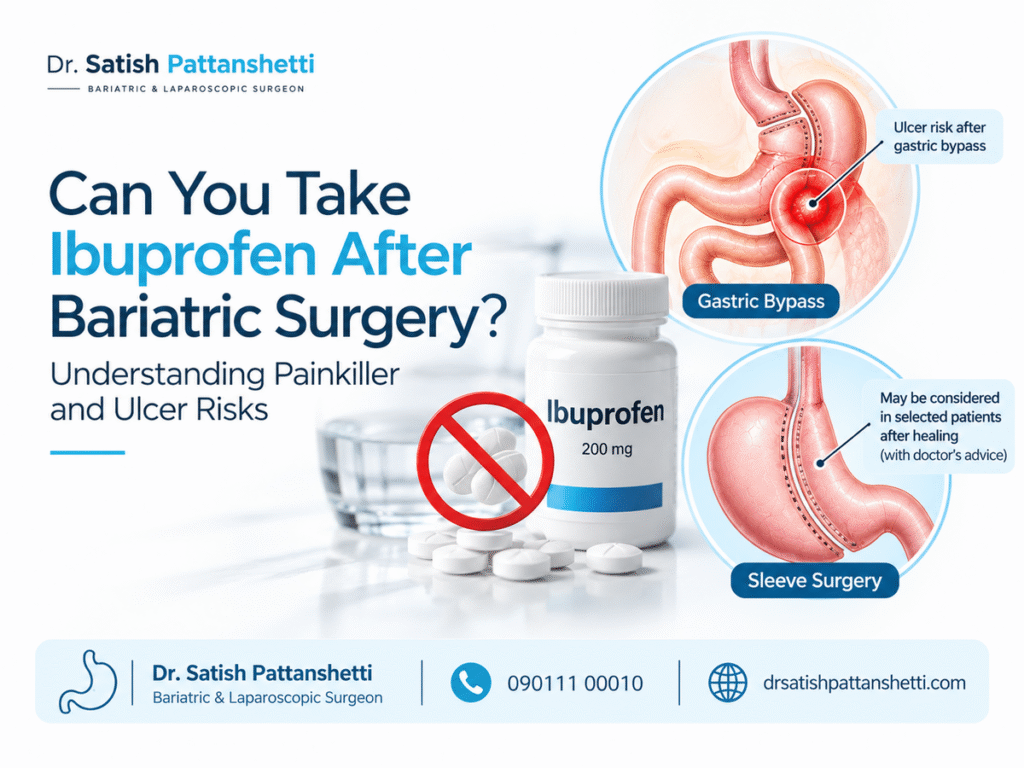
Ibuprofen is generally avoided after bariatric surgery because it can increase the risk of ulcers and bleeding in the digestive tract. This advice is particularly important after gastric bypass. After sleeve surgery, some patients may be allowed to use it once healing is complete, but only after their bariatric team checks whether it is appropriate. A painkiller you used before surgery may no longer be suitable afterwards.
Why Is Ibuprofen a Concern After Bariatric Surgery?
Ibuprofen belongs to a group called non-steroidal anti-inflammatory drugs, or NSAIDs. These medicines reduce pain and inflammation. Naproxen and diclofenac are also NSAIDs, so changing the brand or choosing another anti-inflammatory tablet does not automatically avoid the problem.
After gastric bypass, an ulcer can develop near the connection between the stomach pouch and small intestine. This is called a marginal ulcer. NSAID use is a recognised risk factor, alongside factors such as smoking and medicines that suppress the immune system. The concern is more serious than temporary acidity or an upset stomach.
Is the Advice Different After Gastric Bypass and Sleeve Surgery?
After gastric bypass
Avoiding NSAIDs is usually a long-term recommendation. Feeling fully recovered does not mean the risk has disappeared. UCSF Health advises patients who have had gastric bypass to avoid these medicines indefinitely. If another clinician recommends an anti-inflammatory medicine, tell them about your operation before starting it.
After sleeve gastrectomy
Recommendations are less uniform. UK guidance generally advises avoiding NSAIDs after bariatric procedures as a precaution. Some centres, including UCSF, allow selected sleeve patients to resume them after healing, with approval from their bariatric team. There is no universal restart date that suits everyone.
A Swedish observational study found an association between longer NSAID exposure and ulcers after gastric bypass, but did not identify the same association after sleeve surgery. This does not prove that ibuprofen is harmless after a sleeve or that short courses are safe for every bypass patient. Research findings need to be considered alongside your medical history.
What Can You Take for Pain Instead?
Paracetamol, also called acetaminophen, is commonly included in pain relief plans after bariatric surgery. Your clinician or pharmacist can confirm whether it is suitable and which preparation to use. The choice may depend on how recently you had surgery and your other medicines.
Check the ingredients in cold remedies and combination painkillers. Taking two products that both contain paracetamol can lead to an accidental overdose and liver damage. Follow the prescribed or labelled instructions, and ask a pharmacist if you are unsure what a product contains.
If pain keeps returning or your current treatment is not helping, ask for a review. A plan for ongoing pain needs to consider both its cause and changes in medicine absorption after surgery. Simply increasing painkillers yourself may not solve the problem.
What If You Already Took Ibuprofen?
Taking a dose does not automatically mean that an ulcer has developed. However, research cannot guarantee that a particular dose is safe for an individual patient. Contact your bariatric team or pharmacist for advice before taking further non-prescribed doses.
Have the packet ready and explain the medicine’s name, strength, amount taken and timing. Also mention your operation type, when it was performed and any symptoms. If ibuprofen was prescribed for another condition, ask the prescriber to coordinate with your bariatric team about the next step.
Which Symptoms Need Medical Attention?
Repeated upper abdominal pain, burning discomfort, nausea or vomiting can occur with an ulcer, but symptoms alone cannot confirm the diagnosis. Arrange an assessment for persistent symptoms. Worsening pain or repeated vomiting needs urgent medical advice; a clinician may recommend investigations, including an examination of the stomach with a camera.
Seek emergency care immediately if you have:
- Vomiting of blood or material resembling coffee grounds.
- Black, sticky, tar-like stools or blood in your stools.
- Severe abdominal pain or a tummy that is painful to touch.
These symptoms can indicate a serious complication. Do not wait for a routine clinic appointment or try to manage them only with painkillers.
Frequently Asked Questions
Does an acidity medicine make ibuprofen safe?
No. Proton pump inhibitors, such as omeprazole, reduce stomach acid and can lower ulcer risk, but they do not provide permission to self-medicate with ibuprofen. Your team should decide whether an NSAID is necessary and what protection or monitoring is appropriate.
What if I take aspirin for my heart?
Prescribed aspirin requires a separate discussion because it may be used to prevent blood clots. Do not stop or change it yourself because of general advice about painkillers. Ask your prescriber and bariatric team to review its benefits, bleeding risks and any need for stomach protection.
Can I crush painkiller tablets after surgery?
Not every tablet can be crushed. Some slow-release or specially coated medicines may work differently after surgery, and crushing them can be inappropriate. Ask a pharmacist about the exact product, especially during early recovery when your team may recommend a different preparation.
Planning Your Pain Relief After Surgery
A written pain relief plan can help you manage headaches, dental treatment or joint pain without guessing. Keep your surgery details and medicine list available for other healthcare professionals.
If you are considering or have undergone Bariatric surgery in pune, discuss your pain relief needs with Dr. Satish Pattanshetti. Ask which medicines suit your procedure and when ongoing pain needs further assessment.