
Looking Beyond Weight During Obesity Treatment in Pune
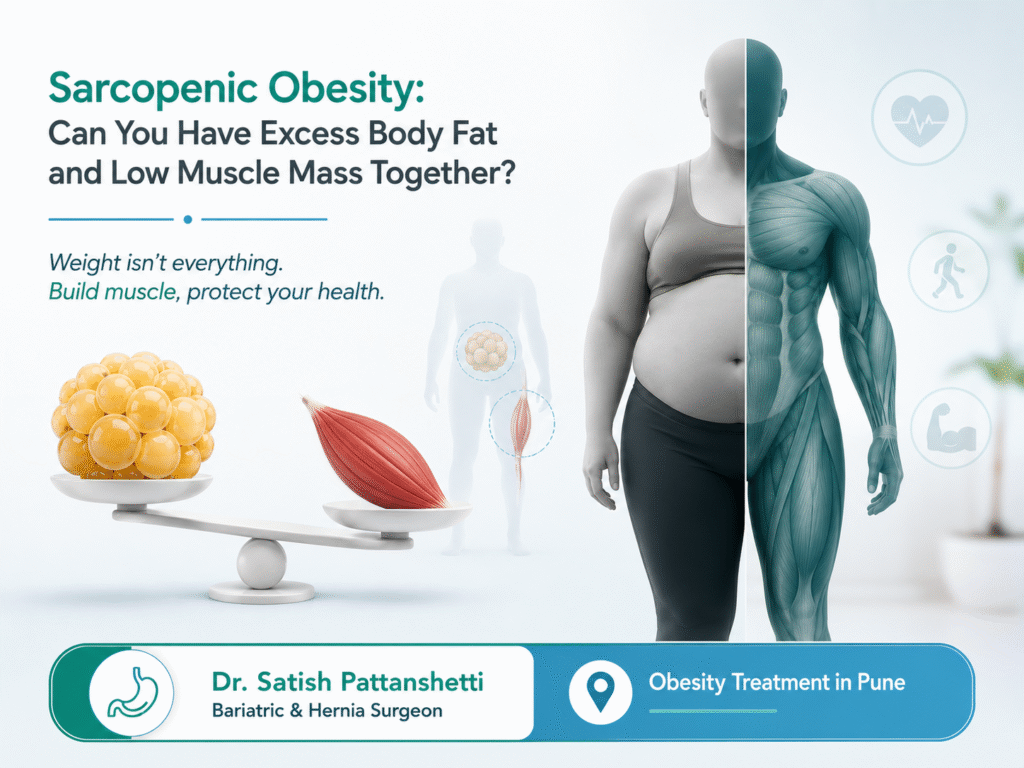
It is possible to have excess body fat and too little healthy muscle at the same time. This combination is called sarcopenic obesity. It may be missed when health is judged only by body weight or body mass index, because neither reveals how much of the body is fat, muscle, bone or water.
Sarcopenic obesity matters because muscle supports movement, balance, glucose control and recovery from illness or surgery. A person may lose kilograms but also lose muscle, leaving strength and function worse. Modern obesity treatment in Pune should therefore consider body composition and physical ability, not just the number on the scale.
What Does Sarcopenic Obesity Mean?
The joint consensus from the European Society for Clinical Nutrition and Metabolism and the European Association for the Study of Obesity defines sarcopenic obesity as the coexistence of excess body fat and low muscle mass or function. The consensus proposes screening, followed by assessment of muscle function and body composition when risk is present.
This is not limited to older adults. Age related muscle loss increases risk, but prolonged inactivity, repeated crash dieting, chronic disease, inadequate protein and rapid weight loss can contribute at other ages. Obesity itself may make movement difficult and can promote inflammation that affects muscle quality.
Someone can look broad or heavy while having limited strength. The fat tissue can conceal low muscle mass, which is why appearance and weight alone are unreliable.
Signs That Deserve Attention
Possible clues include:
Difficulty rising from a chair, climbing stairs, carrying shopping or walking at a usual pace
Frequent falls, poor balance, early fatigue or reduced grip strength
Repeated weight loss with regain, long inactivity or recovery after a major illness
These signs are not specific. Arthritis, anaemia, heart disease, nerve problems and many other conditions can produce weakness. A proper assessment is needed instead of assuming that every mobility problem is caused by body composition.
Why BMI Cannot Diagnose the Problem
BMI relates weight to height and is useful for population screening, but it cannot distinguish fat from muscle. Two people with the same BMI may have very different waist size, strength and metabolic risk. A person can even lose weight while the percentage of body fat rises if muscle loss is proportionally greater.
The ESPEN and EASO consensus recommends combining functional and body composition assessment. Muscle strength may be screened with a handgrip test or a chair stand test. Body composition may be estimated with dual energy X ray absorptiometry or bioelectrical impedance, depending on availability and clinical need.
No single device is perfect. Hydration, recent food intake and technical factors can affect measurements. Results should be interpreted by a trained professional alongside the person’s function and health history.
Why It Matters for Health and Surgery
Low muscle function can reduce independence and make falls more likely. Muscle is also an important site for glucose disposal, so poor muscle health may worsen insulin resistance. During illness, the body relies on protein reserves for healing and immune function.
Before bariatric or other major surgery, low muscle reserves may affect recovery. This does not automatically prevent surgery, but it may change preparation. Improving protein intake, strength and medical stability can make the treatment pathway safer.
Weight loss programmes that focus only on severe calorie restriction can aggravate muscle loss. The aim should be reduction of excess fat while preserving or rebuilding muscle as far as possible.
Building a Muscle Preserving Plan
A safe plan commonly includes:
Progressive resistance exercise adapted to joint health, balance and current fitness
Adequate protein distributed through the day, based on individual kidney function and nutritional needs
Sustainable energy reduction rather than repeated extreme diets
Walking and aerobic exercise support heart health, but they do not fully replace resistance work for muscle. Beginners may start with chair based exercises, bands or supervised machines. Progress should be gradual, especially for people with pain, falls or long inactivity.
Protein needs should not be copied from an online calculator. Kidney disease, liver disease, age and bariatric surgery can alter the plan. A dietitian can help select foods and supplements without creating excessive calories.
Sleep, vitamin D status, diabetes control and treatment of pain also influence activity and recovery. The best plan addresses barriers rather than simply telling a weak person to exercise more.
Monitoring Progress Beyond Kilograms
Useful measures may include waist circumference, chair stand performance, walking ability, grip strength and changes in body composition. Improvements in energy, balance and the ability to complete daily tasks are meaningful even if weight loss slows.
During medical weight loss or after bariatric surgery, rapid changes deserve nutritional follow up. Adequate protein and prescribed supplements remain important. New weakness, repeated falls or difficulty eating should be reported promptly.
Consult Dr. Satish Pattanshetti for Obesity Treatment in Pune
Dr. Satish Pattanshetti provides individual assessment for patients considering medical or surgical obesity treatment in Pune. The evaluation can include weight history, associated conditions, nutritional risk, and preparation for bariatric surgery, with attention to preserving muscle and functional health.
Frequently Asked Questions
- Can a young person have sarcopenic obesity?
Yes. It is more common with ageing, but inactivity, chronic illness, inadequate nutrition and repeated extreme dieting can produce low muscle mass or function at younger ages.
- Can strength training help if I have obesity and joint pain?
Often yes, when it is adapted. A physiotherapist or qualified trainer can use seated, water based or low impact resistance exercises. Medical review is important when pain, balance problems or heart symptoms limit activity.
- Is body composition testing necessary for everyone?
No. Screening can begin with history and simple functional tests. More detailed testing is useful when weakness, rapid weight loss, surgery preparation or uncertainty about muscle reserves could change treatment.
#obesitytreatmentinpune #sarcopenicobesity #musclehealth #bodycomposition #metabolichealth #drsatishpattanshetti