
Preparing Safely for Bariatric Surgery in Pune
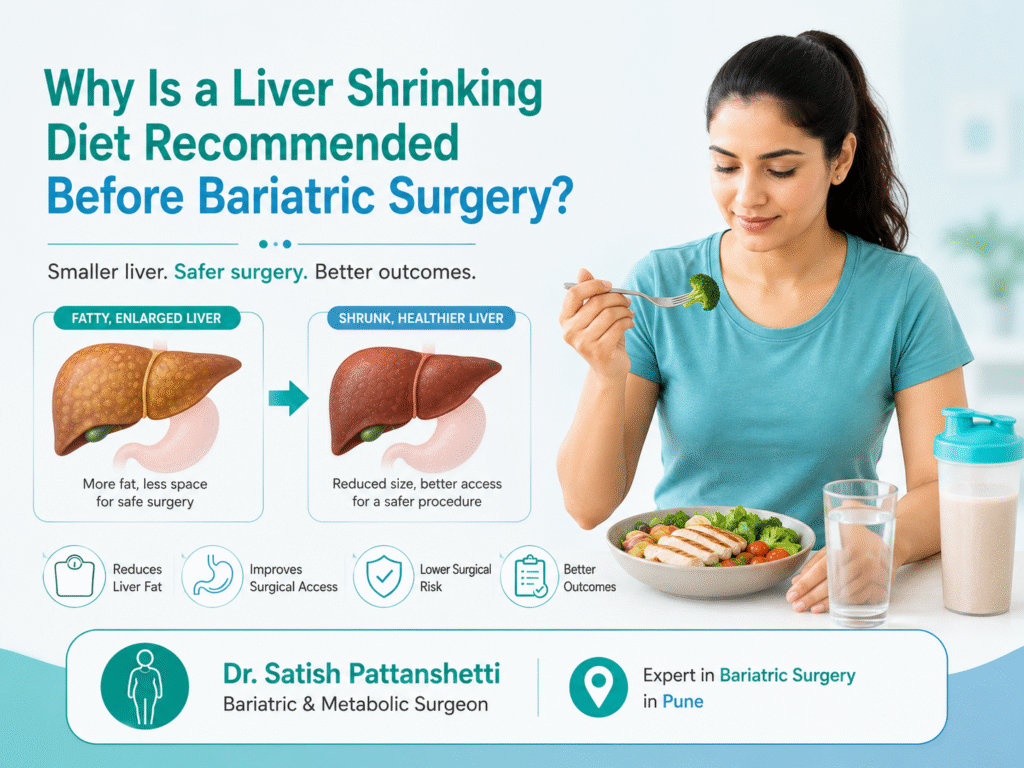
Before bariatric surgery, many patients are asked to follow a short, carefully planned low calorie diet. It is often called a liver shrinking or liver reducing diet. The name can sound unusual, but the purpose is practical: to reduce liver volume and internal fat so the surgeon has safer access to the upper stomach.
This diet is not a test of willpower and it is not meant to produce the largest possible weight loss before the operation. It is a temporary medical preparation. The exact plan should come from the bariatric team because calorie, protein and medicine needs vary. Patients preparing for bariatric surgery in Pune should not copy an internet plan or begin extreme fasting.
Why the Liver Can Make Surgery More Difficult
The liver lies over the upper stomach, which is the area where sleeve gastrectomy and gastric bypass are performed. In people with obesity, the liver may be enlarged because fat has accumulated within it. The left lobe can become thick and less flexible, limiting the working space available during keyhole surgery.
During the operation, the liver must be lifted gently. A larger, fatty liver can make this more difficult, reduce visibility and increase the chance of bleeding or tissue injury. Reducing liver volume before surgery can improve exposure and make the planned steps easier to perform.
The liver can change relatively quickly because it stores glycogen, a form of carbohydrate that holds water. Restricting calories and carbohydrate under supervision reduces glycogen and associated water, while also lowering some liver fat.
What Does the Evidence Say?
The 2021 update of the Enhanced Recovery After Surgery Society guidelines for bariatric surgery describes a two to four week low calorie or very low calorie diet as common preoperative practice. The guideline reports that these diets can reduce liver volume and the surgeon’s perception of procedural complexity.
This does not mean that every patient needs the same number of days or the same calorie target. Duration may be influenced by body size, liver findings, operation type, diabetes medicines and the hospital protocol. The prescription should be specific and documented.
What Does a Liver Shrinking Diet Usually Include?
Plans vary between centres, but common principles include:
A defined calorie range with adequate protein to help protect muscle
Measured portions or prescribed meal replacements rather than unrestricted healthy foods
Low sugar choices, limited high carbohydrate foods and sufficient non sugary fluids
Some programmes use liquid meal replacements, while others use a food based plan or a combination. Both can work when the nutritional target is appropriate. The safest option is the one prescribed and monitored by the treating team.
Protein remains important because rapid dieting can otherwise increase muscle loss. Adequate fluid and any recommended electrolytes also matter. Alcohol should be avoided because it adds calories, affects the liver and can increase dehydration or anaesthetic risk.
Why Exact Adherence Matters
The liver can refill glycogen and water when large carbohydrate meals are eaten. A planned final treat or cheat meal can therefore reduce some of the benefit achieved during the diet. It may also cause abrupt glucose changes, reflux or digestive discomfort.
If the plan is broken, be honest with the team. Do not compensate with starvation, double restriction or extra medicines. The surgeon can decide whether the operation can proceed safely. Hiding the problem removes the opportunity to manage it.
Short term symptoms such as headache, hunger, tiredness or constipation can occur as eating changes. These usually improve, but persistent dizziness, vomiting, very low glucose or inability to drink requires prompt advice.
Diabetes and Blood Pressure Medicines Need Review
Reducing carbohydrate and calories can lower glucose quickly. A person using insulin or medicines that cause hypoglycaemia may need dose changes from the start of the diet. Continuing the usual dose without advice could cause dangerously low glucose.
Blood pressure may also fall as fluid balance and intake change. The bariatric or medical team should provide instructions on monitoring, medicine adjustment and what to do if readings are outside the advised range.
Never stop prescribed medicine independently. Blood thinners and other treatments may have separate preoperative instructions that are unrelated to the liver diet.
Tips for Completing the Diet Safely
Plan permitted meals and fluids in advance, including arrangements for work or travel
Remove trigger foods from immediate reach and explain the medical purpose to family members
Contact the team early for low glucose, dehydration, repeated vomiting or difficulty following the plan
Avoid strenuous new exercise during a highly restricted diet unless approved. Gentle activity may continue if comfortable, but the priority is safe preparation. Weighing every day is not necessary unless the team asks for it.
The diet ends according to the surgical instructions. Patients must also follow fasting rules before anaesthesia, which are separate from the liver reducing plan.
Consult Dr. Satish Pattanshetti for Bariatric Surgery in Pune
Dr. Satish Pattanshetti guides patients through assessment, preparation, surgery and follow up. If you are considering bariatric surgery in Pune, an individual plan can address liver size, nutrition, diabetes medicines and the procedure best suited to your health needs.
Frequently Asked Questions
- How long is a liver shrinking diet usually followed?
Many programmes use approximately two to four weeks, but the correct duration varies. Follow the dates given by your bariatric team rather than extending or shortening the diet yourself.
- Can I use any protein shake for the diet?
No. Products differ in calories, sugar, protein, vitamins and electrolytes. Use only the prescribed product or an approved alternative so the intended nutritional plan remains accurate.
- What happens if the liver has not reduced enough?
The surgeon will assess safety based on the overall situation. In some cases the operation may be more difficult or need postponement. Honest communication is safer than trying to hide missed days or compensate with extreme fasting.
#bariatricsurgeryinpune #livershrinkingdiet #bariatricpreparation #weightlosssurgery #metabolicsurgery #drsatishpattanshetti