
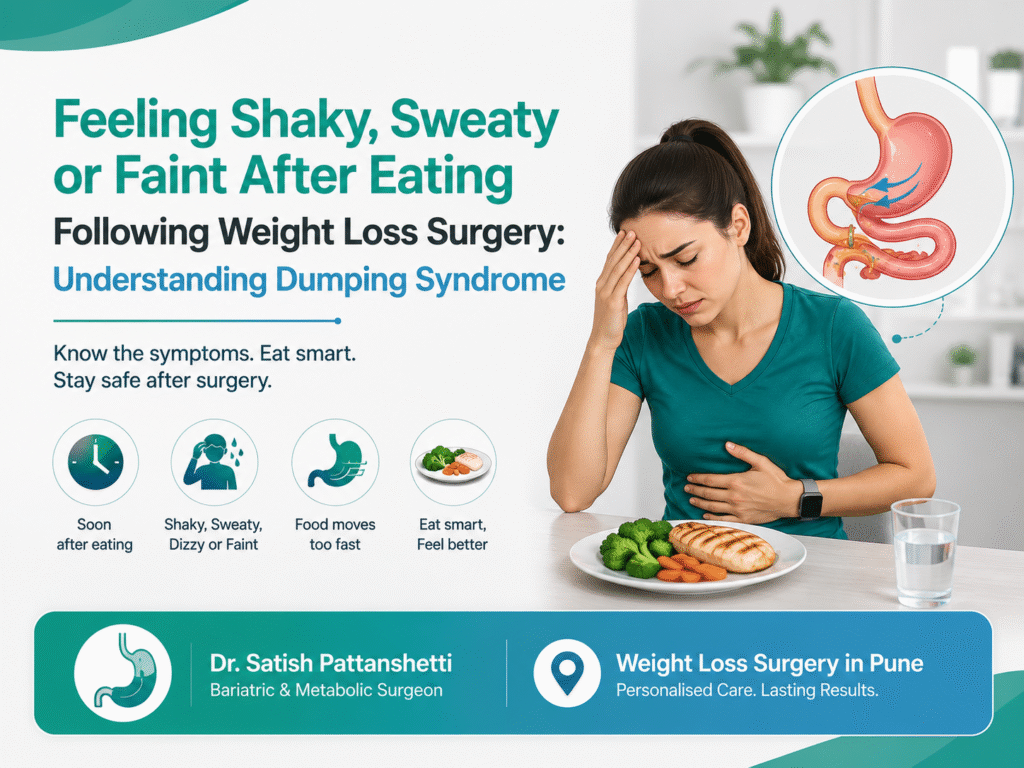
Recognising Dumping Syndrome After Weight Loss Surgery in Pune
Feeling shaky, sweaty, weak or faint after a meal can be frightening, especially after weight loss surgery. These symptoms may be related to dumping syndrome, a group of reactions that can occur when food moves too quickly from the stomach into the small intestine. It is seen most often after gastric bypass, although similar symptoms can occur after other operations that alter stomach emptying.
Dumping syndrome is manageable, but the timing of symptoms matters. Early dumping and late dumping have different mechanisms, and fainting or recurrent low glucose needs proper assessment. Anyone experiencing these symptoms after weight loss surgery in Pune should avoid self diagnosis and discuss the pattern with the bariatric team.
What Is Early Dumping Syndrome?
Early dumping usually begins within about 10 to 30 minutes after eating. Food, particularly a concentrated sugary meal, enters the small intestine rapidly. Fluid then shifts from the bloodstream into the intestine, and gut hormones and the nervous system respond strongly.
This can cause abdominal fullness, cramping, nausea, diarrhoea, flushing, sweating, dizziness, palpitations and an urge to lie down. Some people describe sudden exhaustion or a pounding heartbeat. Symptoms may be intense even though they settle within a relatively short time.
The international consensus on dumping syndrome, published in Nature Reviews Endocrinology, recognises the rapid movement of nutrients and resulting fluid and hormonal changes as central to early dumping. The diagnosis is based on a careful history and, when needed, supervised testing.
What Is Late Dumping or Post Meal Hypoglycaemia?
Late symptoms more often occur one to three hours after eating. Rapid carbohydrate absorption produces a sharp rise in blood glucose. The body may release more insulin than needed, causing glucose to fall quickly afterward. The result may be shaking, sweating, intense hunger, weakness, difficulty concentrating, blurred vision or faintness.
Late dumping is often called postprandial hypoglycaemia. BOMSS guidance notes that sweating, shaking, feeling unwell or blackouts after eating should prompt referral to a bariatric service, with urgency based on severity.
Not every episode is confirmed low glucose. Similar symptoms can occur with dehydration, anaemia, low blood pressure, medication effects, anxiety or heart rhythm problems. This is why recording the timing, food eaten and any glucose reading is more useful than assuming the cause.
Common Food and Eating Triggers
Symptoms are often linked to how quickly food is eaten and how concentrated the meal is. Frequent triggers include:
Sugary drinks, sweets, desserts, syrups and refined carbohydrate eaten alone
Large portions, eating rapidly or drinking a substantial amount with meals
Meals low in protein and fibre, especially after a long gap without food
Tolerance differs between patients. A short food and symptom record can reveal a pattern without creating an unnecessarily restrictive diet.
Practical Steps That Often Help
Dietary changes are the first treatment approach recommended by the international consensus. A bariatric dietitian may advise:
Eat smaller meals slowly, chew thoroughly and stop before feeling overfull
Include protein and fibre, and choose carbohydrates that are absorbed more gradually
Separate fluids from meals as directed, while maintaining adequate hydration between meals
Avoid cutting out all carbohydrates without professional advice. The goal is steadier absorption and balanced nutrition. Some patients benefit from dividing food across several planned meals, but constant grazing can undermine nutrition and weight management.
If symptoms begin, sit or lie safely to prevent a fall. For suspected low glucose, follow the rescue plan provided by the clinical team. Repeatedly treating symptoms with large amounts of sweets may cause another rapid rise and fall, so prevention and an individual plan are important.
When Testing or Medicine May Be Needed
A clinician may request blood tests to look for anaemia or nutritional deficiency and may review blood pressure and medicines. Glucose monitoring can help connect symptoms with actual glucose levels. In selected cases, a supervised mixed meal or oral glucose test may be used, although testing must be interpreted carefully.
Persistent late dumping may require specialist dietary treatment and medicine. Acarbose can slow carbohydrate digestion in some patients, while other therapies are reserved for more severe cases. Surgical or endoscopic revision is rarely the first step and is considered only after a detailed evaluation and failure of less invasive management.
Red Flags That Need Prompt Medical Review
Seek urgent advice if there is loss of consciousness, seizure, chest pain, severe confusion, injury during an episode or a very low glucose reading that does not improve. Recurrent vomiting, inability to drink, black stools or progressive swallowing difficulty also require assessment because they may indicate a different postoperative problem.
Do not drive or operate machinery if episodes are unpredictable. Frequent symptoms can affect nutrition and quality of life, but they should not simply be accepted as the price of surgery.
Consult Dr. Satish Pattanshetti for Weight Loss Surgery in Pune
Dr. Satish Pattanshetti provides assessment and follow up for patients before and after weight loss surgery in Pune. A structured review can distinguish dumping syndrome from other causes, identify dietary triggers and decide whether testing, dietitian support or additional treatment is required.
Frequently Asked Questions
- Does dumping syndrome mean the surgery has failed?
No. Dumping syndrome is a recognised effect of altered stomach emptying and does not by itself mean that the operation has failed. Most cases improve with informed food choices, meal timing and specialist follow up.
- Can dumping syndrome occur years after surgery?
Yes. Symptoms may appear or become noticeable months or years later, especially when eating patterns change. New symptoms still need evaluation because other conditions can mimic dumping syndrome.
- Should I eat sugar immediately whenever I feel shaky?
Not automatically. Shakiness does not always mean low glucose. If hypoglycaemia has been confirmed, follow the specific rescue plan provided by your clinician. Repeated large sugar doses can sometimes trigger another rapid glucose swing.
#weightlosssurgeryinpune #dumpingsyndrome #bariatriccare #postbariatricsurgery #metabolichealth #drsatishpattanshetti