
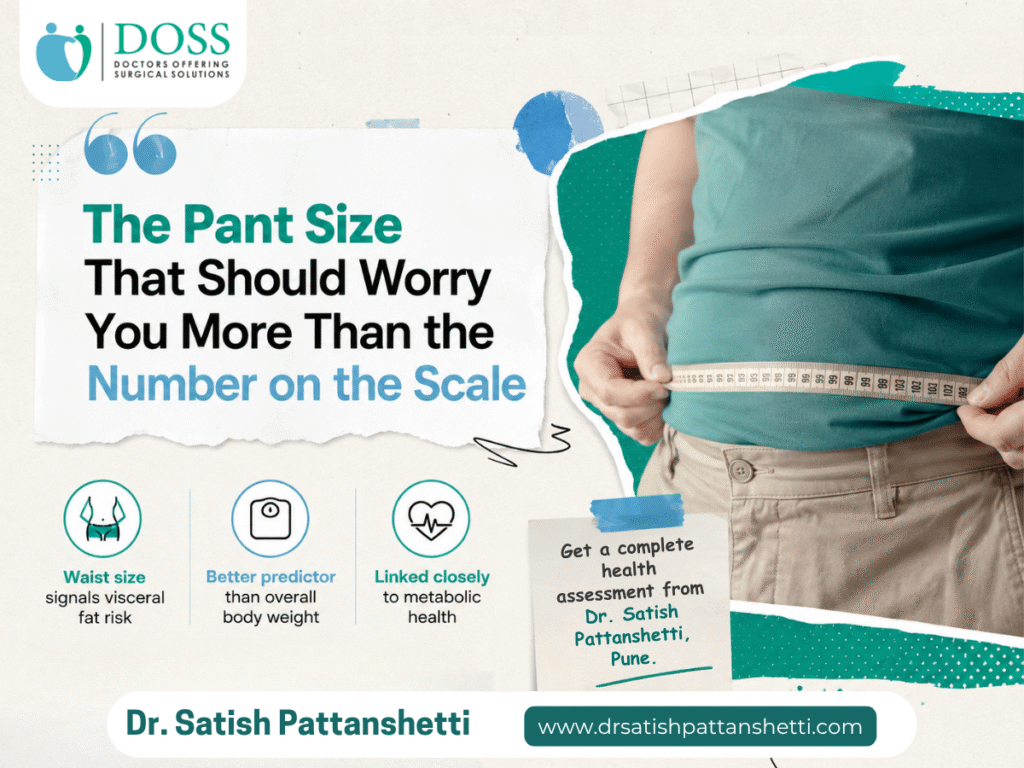
Most of us track our weight. Fewer of us track our waistline. Yet if you had to pick one number to watch for your long term health, doctors increasingly agree it should be the size of your waist, not the number on your bathroom scale.
You can weigh exactly the same as you did five years ago and still be at higher risk today, simply because more of that weight has shifted around your midsection. That shift matters far more than most people realize.
Why the Scale Doesn’t Tell the Whole Story
The number on a scale measures total body mass. It cannot tell you where that mass is sitting or what it’s doing to your organs. Two people with identical weight and height can have very different health risks depending on how their fat is distributed.
This is where waist circumference becomes useful. Fat stored around the abdomen, known as visceral fat, wraps around internal organs like the liver, pancreas, and intestines. Fat stored on the hips or thighs behaves very differently and carries far less metabolic risk.
Researchers have found that abdominal obesity is a stronger predictor of future health problems than body mass index alone. A study published in the journal Frontiers in Endocrinology, using data from the National Health and Nutrition Examination Survey, found that people with a high waist-to-BMI ratio had more than three times the risk of overall and cardiovascular mortality compared to those with a healthier ratio. In fact, waist circumference outperformed BMI as a predictor of death from both causes.
Similarly, research published on middle-aged men found that measuring waist circumference alone was a reliable way to flag individuals at higher future risk for type 2 diabetes and cardiovascular disease, concluding that this simple measurement deserves a more routine place in everyday medical checkups.
What Counts as a Risky Waist Size
There isn’t a single universal number, since healthy cutoffs vary slightly by population and study, but general clinical guidance is widely used as a reference point.
- According to cutoffs established by the U.S. National Institutes of Health and cited in CDC-published research, a waist circumference above 102 cm (about 40 inches) in men and above 88 cm (about 35 inches) in women is considered elevated and linked to a higher risk of obesity-related health outcomes.
- A CDC-backed analysis of American adults found that 55 percent of the study population had a high-risk waist circumference, even though only 39 percent were classified as obese by BMI alone. That gap is significant. It means a large share of people who look “fine” on a BMI chart may still be carrying dangerous levels of abdominal fat.
- Separate research on younger adult males found that a waist circumference of 100 cm or more was linked to significantly higher total cholesterol, LDL cholesterol, and triglycerides, along with lower protective HDL cholesterol, all markers tied to cardiovascular risk.
If your pant size has crept up over the past couple of years, even while your weight on the scale looks stable, it’s worth paying attention.
Why Abdominal Fat Is More Dangerous Than It Looks
Visceral fat isn’t just inert padding. It behaves almost like an active organ, releasing inflammatory chemicals and hormones that interfere with how your body processes sugar and fat. Over time, this contributes to a cluster of problems that rarely show up all at once, which is part of why it goes unnoticed for so long.
Some of the associated risks include:
- Insulin resistance and a higher likelihood of developing type 2 diabetes
- High blood pressure and unfavorable cholesterol patterns
- Increased strain on the heart and blood vessels
- A higher likelihood of fatty liver disease
None of these conditions announce themselves loudly in the early stages. That’s exactly why waist size is a more honest early warning signal than waiting for the scale to move or for symptoms to appear.
Rethinking How We Measure Progress
If you’re working on your health, it’s worth shifting some of your focus away from the scale and toward your waistline. A tape measure around your belly button, taken consistently under similar conditions, tells a more complete story of how your body composition is actually changing.
This doesn’t mean the scale is useless. Weight still matters. But pairing it with a waist measurement gives a fuller, more accurate picture, especially for people whose weight has plateaued while their shape has quietly changed.
When to Seek Professional Obesity Treatment
Lifestyle changes such as better nutrition, regular movement, and improved sleep go a long way for many people. But when abdominal fat and its related risks don’t respond to these changes, or when other health markers like blood sugar and blood pressure are already affected, it’s time to move beyond guesswork.
Structured obesity treatment looks different for every individual. It may involve a combination of medical evaluation, personalized nutrition planning, activity programs, and in some cases, clinical or surgical interventions for those with more advanced obesity. What matters most is getting an accurate picture of your risk rather than relying on the scale alone, and building a plan around that.
Dr. Satish Pattanshetti often points out that patients are frequently surprised to learn their waistline was flagging a problem long before their weight or energy levels changed noticeably. Catching that shift early makes treatment considerably more effective.
How We Can Help
If your waistline has been creeping up despite your best efforts, or if you’re unsure whether your current weight and body shape actually put you at risk, it helps to get a proper clinical assessment rather than relying on guesswork. Dr. Satish Pattanshetti specializes in evaluating abdominal fat, metabolic risk, and long term obesity management, and offers structured, evidence-based obesity treatment in Pune tailored to each patient’s health profile. Rather than chasing a number on the scale, the goal is to address the underlying risk factors before they turn into bigger health problems. If this sounds like where you are right now, a consultation is a sensible next step.
Frequently Asked Questions
- Is waist size a better health indicator than BMI? For many people, yes. Waist circumference reflects abdominal or visceral fat, which is more strongly linked to conditions like diabetes and heart disease than total body weight. Research using NHANES data has shown that waist measurements can predict mortality risk more accurately than BMI alone, making it a valuable addition to any health assessment.
- What waist size is considered a health risk? General clinical guidelines flag a waist circumference above 102 cm (40 inches) in men and 88 cm (35 inches) in women as high risk, based on cutoffs referenced in CDC and NIH research. However, ideal ranges can vary by population, so it’s best to discuss your specific numbers with a doctor rather than relying on a single global cutoff.
- When should I consider professional obesity treatment instead of just diet and exercise? If lifestyle changes haven’t reduced your waist size or improved related markers like blood sugar and blood pressure after a reasonable effort, or if you already have obesity-related health complications, it’s a good time to seek professional obesity treatment. A specialist can identify the underlying drivers and recommend a plan suited to your specific health profile.
#ObesityTreatment #WaistSize #GutHealth #WeightManagement #ObesityTreatmentInPune #HealthyLiving #MetabolicHealth #VisceralFat #WellnessJourney #HeartHealth