
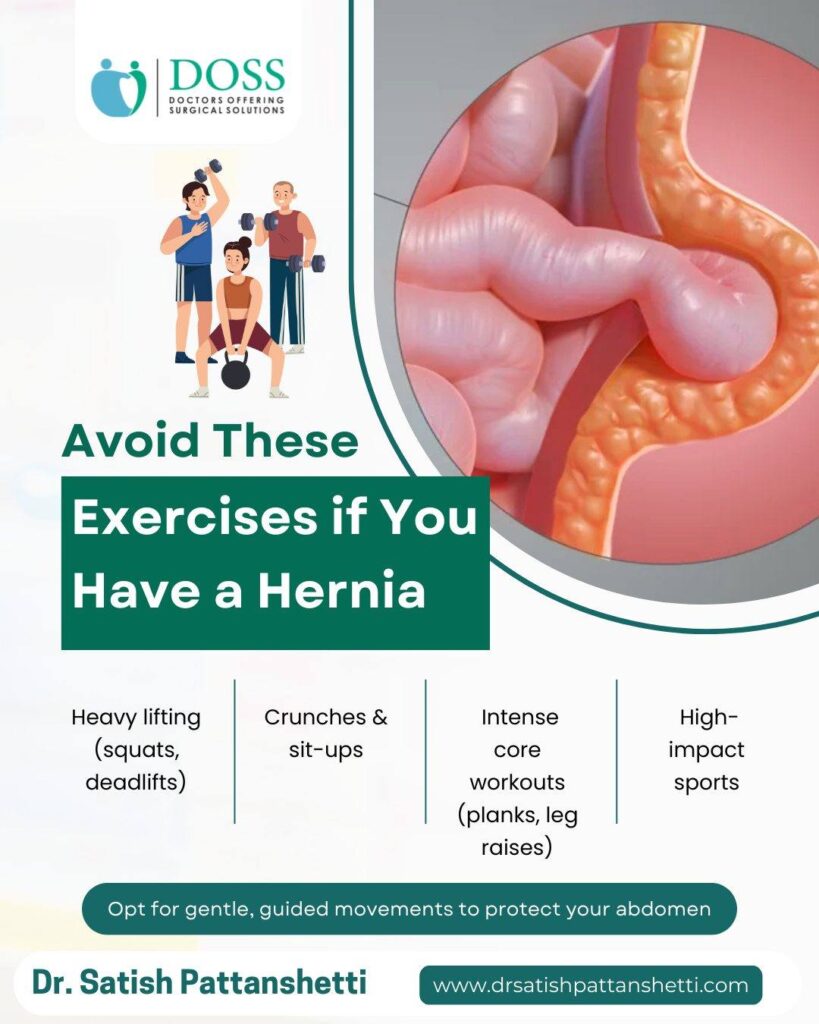
Hernias can be more than just a minor discomfort — they’re a structural issue where a part of an organ (often intestine or fat tissue) pushes through a weakened spot in the abdominal wall. If left unchecked or aggravated by improper activity, hernias can become painful and may even lead to complications that require urgent surgery. Before starting or continuing any fitness routine, it’s vital to understand which exercises could make things worse and why rest and medical guidance matter.
What Is a Hernia and Why It Matters
A hernia happens when internal tissues bulge through a weak point in your abdominal muscles. While some hernias develop slowly, others occur suddenly after physical strain. Hernias don’t always resolve on their own, and the only definitive treatment for most types is surgical repair — especially if they cause pain, grow in size, or restrict organ function.
Under the care of an experienced specialist like Dr. Satish Patanshetti, patients with hernias in Pune receive thorough assessment and tailored treatment plans — from conservative care to advanced laparoscopic surgery.
Exercises You Should Avoid if You Have a Hernia
If you suspect a hernia or have been diagnosed with one, you must avoid activities that increase pressure in your abdomen or strain the abdominal wall. These include:
Heavy Lifting
-
Deadlifts, heavy squats, and weighted presses
-
Carrying heavy grocery bags, furniture, or equipment
These movements dramatically increase intra-abdominal pressure, pushing tissues through the hernia defect.
Core-Straining Moves
-
Sit-ups, crunches, leg raises, planks
-
Hanging exercises that make you bear down
These engage your core intensely and place stress directly on the weakened abdominal area.
High-Impact Activities
-
Sprinting, high-intensity interval training
-
Jumping, contact sports
Any activity with sudden forceful movements can worsen a hernia or cause pain.
Strenuous Gym Routines
Even seemingly safe machines can be risky if they require strong core engagement or holding your breath (a move that spikes abdominal pressure).
What You Can Do Instead
Staying healthy and mobile while managing a hernia is still possible with low-impact options. According to general surgical guidance:
✔ Walking — keeps blood moving without strain
✔ Gentle cycling or swimming — good cardio without heavy impact
✔ Modified stretching or gentle yoga — avoid deep core engagement
Always pay attention to how your body responds — stop any activity that causes pain or bulging — and discuss your routine with your surgeon.
Expert Guidance: When to Seek Treatment
A hernia won’t heal on its own and can grow larger or more painful over time. If you’ve been dealing with discomfort that worsens with activity, it’s time to consult a specialist. Dr. Satish Patanshetti offers comprehensive hernia care in Pune, from diagnosis to laparoscopic repair and post-op recovery planning.
During recovery — especially after surgery — rest and avoiding strain are even more critical. Strenuous movements and lifting are typically discouraged for at least 4–6 weeks post-repair to ensure proper healing.
Final Thoughts
Hernias aren’t just an injury — they’re a warning sign from your body. Ignoring symptoms or pushing through intense exercise can lead to increased discomfort, progression of the hernia, and even emergency situations like incarceration or strangulation. The safest strategy is:
✔ Understand your limitations
✔ Avoid exercises that increase abdominal pressure
✔ Stay active with low-impact, doctor-approved movement
✔ Consult a hernia specialist like Dr. Satish Patanshetti for personalized care
Your health is an investment — and with the right guidance, you can manage your hernia safely and effectively.